


Apicoectomy
Why would I need apicoectomy surgery?
Generally, a root canal is all that is needed to save teeth with injured pulp from extraction. Occasionally, this non-surgical procedure will not be sufficient to heal the tooth and Dr. Khalilkhani, Dr. Daghighi, Dr. Kamura, Dr. Jalali, Dr. Farhadian, Dr. Knight, Dr. Kim, Dr. Eskander, Dr. Saadat, Dr. Wang, Dr. Ghaben or Dr. Wang will recommend endodontic surgery.
Endodontic surgery can be used to locate fractures or hidden canals that do not appear on x-rays but still manifest pain in the tooth. Damaged root surfaces or the surrounding bone may also be treated with this procedure. The most common surgery used to save damaged teeth is an apicoectomy or root-end resection.
What is an apicoectomy?
The video above illustrates what happens during an apicoectomy procedure. An incision is made in the gum tissue to expose the bone and surrounding inflamed tissue. The damaged tissue is removed along with the end of the root tip. A root-end filling is placed to prevent reinfection of the root and the gum is sutured. The bone naturally heals around the root over a period of months restoring full function.
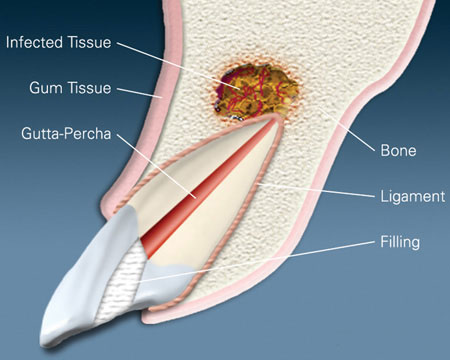
1. Infected Tissue
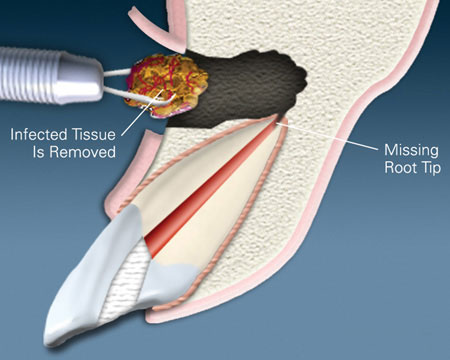
2. Tissue Removed
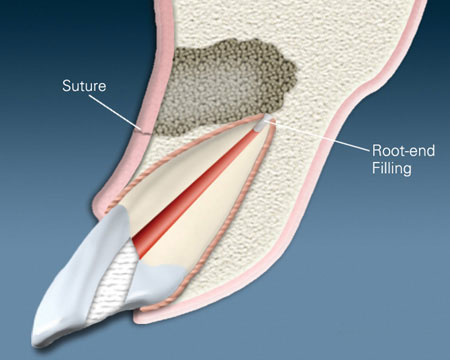
3. Suture Placed
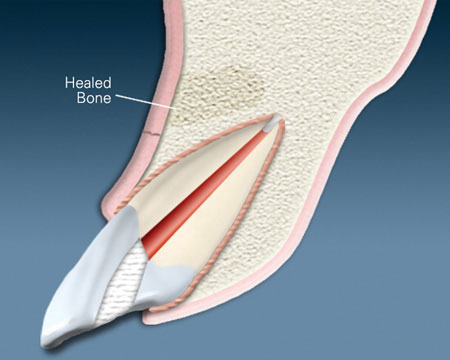
4. Healing Complete
What should I expect during the apicoectomy recovery process?
Following the apicoectomy procedure, there may be some discomfort or slight swelling while the incision heals. This is normal for any surgical procedure. To alleviate any discomfort, an appropriate pain medication will be recommended. If you have pain that does not respond to medication, please call our office.
FAQs About Apicoectomy
How painful is an apicoectomy?
Most patients report only mild to moderate discomfort after an apicoectomy procedure. Local anesthesia is used during treatment to keep you comfortable, and any soreness afterward is typically manageable with prescribed or over-the-counter pain medication.
Is an apicoectomy better than a root canal?
A root canal is usually the first and preferred treatment for saving an infected tooth. However, if infection persists after a root canal, an apicoectomy surgery may be the best option to preserve the natural tooth and avoid extraction.
What are the disadvantages of apicoectomy?
As with any surgical procedure, there are potential risks including swelling, discomfort, infection, or delayed healing. In some cases, the tooth may not heal as expected and additional treatment could be necessary. However, apicoectomy dental procedures are generally considered safe and effective.
Why would a patient need an apicoectomy?
A patient may need an apicoectomy if infection or inflammation remains after a root canal treatment, if there are hidden canals or fractures that cannot be treated non-surgically, or if the root tip and surrounding bone have become damaged.
How much does an apicoectomy cost?
Apicoectomy cost can vary depending on the location of the tooth, the complexity of the case, and whether advanced imaging or sedation is required. In many cases, dental insurance may cover a portion of the apicoectomy procedure if it is considered medically necessary. During your consultation, our team will review your treatment plan, discuss pricing, and answer any questions about your apicoectomy surgery and recovery.